

Leading collaborative, long-term monitoring of wolverines, Canada lynx, and other carnivores
The Cascade Range is one of the last places in the contiguous US capable of supporting its full suite of native carnivores, who help keep our ecosystems healthy and wild.
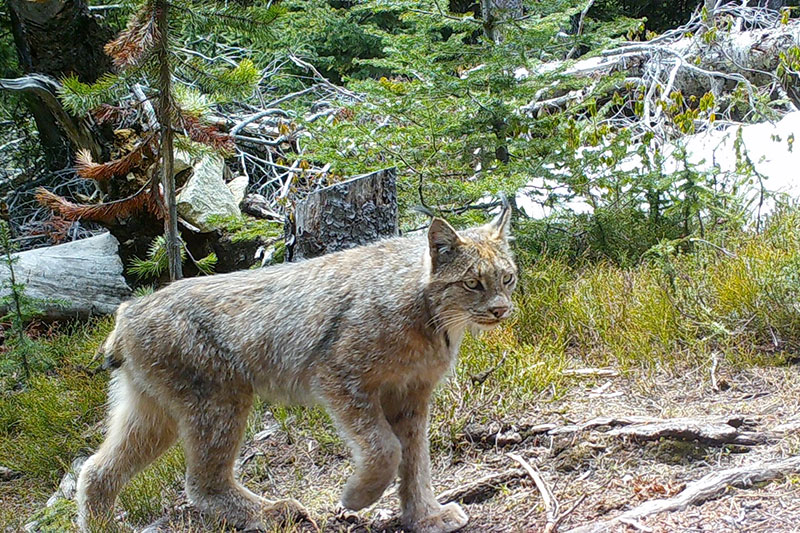
Wolverines and Canada lynx are two of the rarest mammals in the Cascades, but climate change and other human impacts threaten today’s small populations. The persistent spring snowpack that wolverines rely on for maternal denning is at risk from our warming climate, while high-elevation forests inhabited by lynx have been decimated by catastrophic wildfires. Recreation is also putting more pressure on sensitive carnivores as a growing number of people visit the backcountry.
Monitoring vulnerable wolverine and lynx populations is vital to keeping track of where these animals live, how their ranges are changing, and the pathways they’re using to move through the landscape. Policymakers and land managers need monitoring data to make conservation-driven decisions that will protect lynx and wolverines into the future.
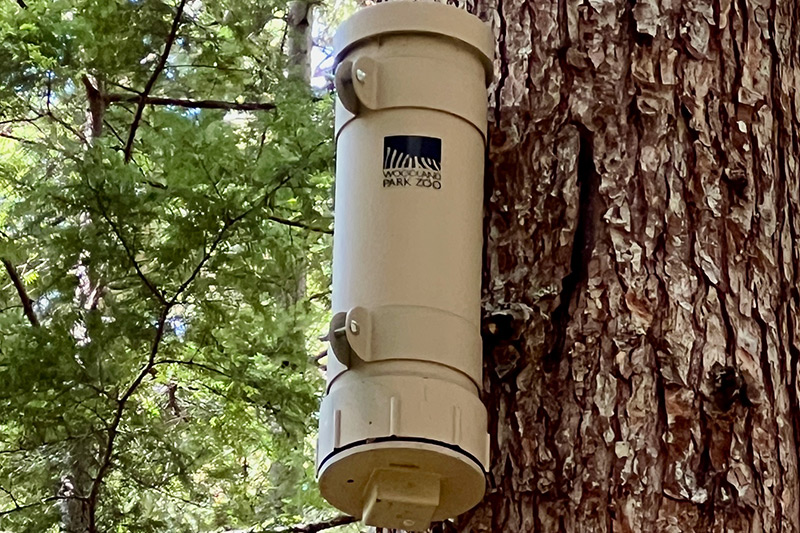
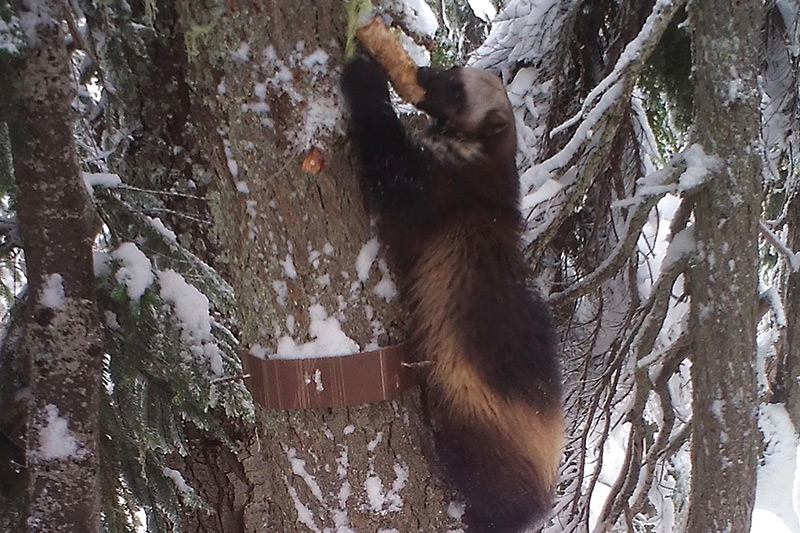
We co-initiated the Cascades Carnivore Monitoring Program (CCMP) with research biologists at Washington State University to develop a highly collaborative, 20-year monitoring program for wolverines and Canada lynx using wildlife cameras in mountainous terrain. Surveys are conducted year-round, with WPZ’s automated scent dispenser enabling us to survey animals at remote, off-trail cameras over the winter—when manual rebaiting is precluded by snowy conditions and avalanche terrain.
Cascades Carnivore Monitoring Program 2025 Progress Report
Cascades Carnivore Monitoring Program 2024 Progress Report
We provide the training and leadership necessary to carry out this coordinated camera-trapping program to support conservation planning for carnivores in the Cascades. More than two dozen partners contribute to CCMP, including collaborators in British Columbia, who are conducting surveys north of the US-Canada border. Transboundary conservation is key to protecting wide-ranging carnivores, whose needs don’t adhere to geopolitical boundaries.
B.C. Ministry of Forests
B.C. Parks
Cascades Carnivore Project
Cascades Wolverine Project
Conservation Northwest
Defenders of Wildlife
Gifford Pinchot NF
Home Range Wildlife Research
Lummi Nation
Mt. Baker-Snoqualmie NF
Muckleshoot Tribe
North Cascades NPS Complex
Okanagan Nation Alliance
Okanogan-Wenatchee NF
Puyallup Tribe
Sauk-Suiattle Tribe
St’át’imc Eco Resources
Swinomish Tribe
Tulalip Tribes
University of B.C.
University of Washington
Upper Skagit Indian Tribe
US Fish & Wildlife Service
USFS Methow Valley RD
USFS PNW Region
USFS PNW Research Station
USFS Region 6
WA Dpt. of Fish & Wildlife
WA Dpt. of Natural Resources
Washington State University
WildCAM
Woodland Park Zoo
Yakama Nation
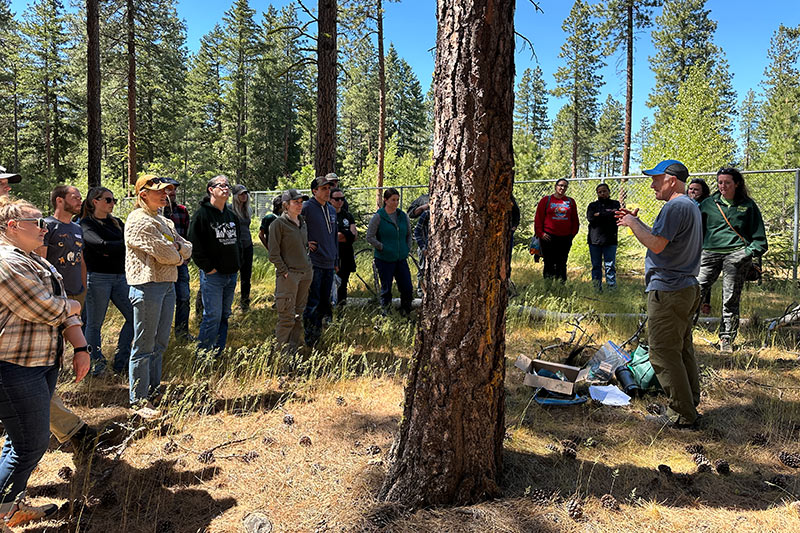
CCMP comprises a diverse network of agencies, Native nations, academic institutions, and nonprofit conservation organizations with a shared commitment to monitoring at-risk carnivores in the Cascades.
To make the best use of the abundant information we collect with camera traps, CCMP shares its data with partners and decision-makers who advance conservation.