Coexisting with Carnivores
SEATTLE URBAN CARNIVORE PROJECT
Engaging local communities in carnivore research and peaceful coexistence
TOOLKITS
As the human population increases rapidly in King County, our footprint increasingly infringes on wildlife habitat, resulting in more contact―and often growing conflict―between wildlife and people. The continued protection of carnivore populations, as well as public safety, depends upon the development of carnivore-friendly communities at a landscape scale.
Coexisting with Coyotes Posters
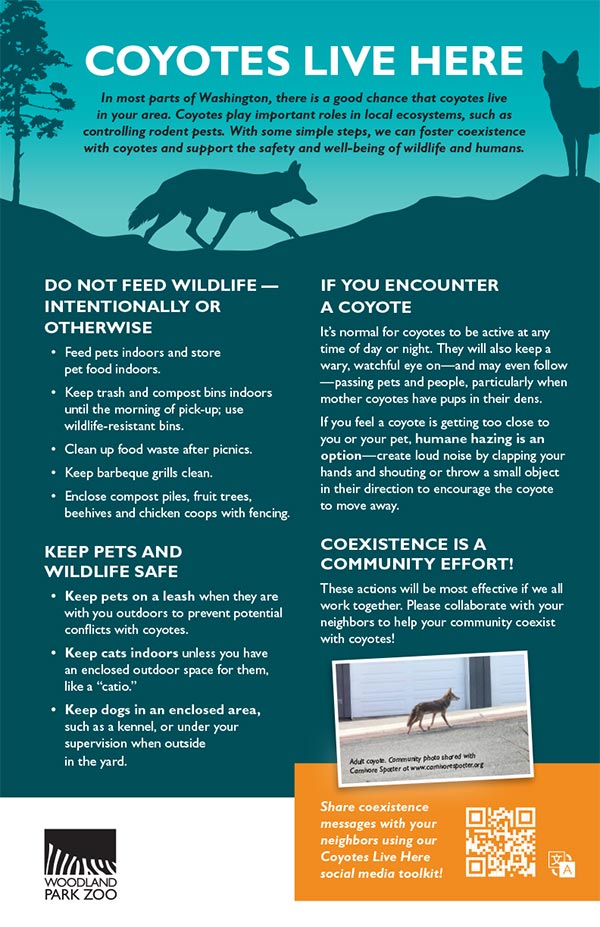
These posters with coyote coexistence action tips were designed for urban and suburban community spaces, such as kiosks at parks, community centers, nature centers and shops. Production of these materials was made possible with support from The Snoqualmie Tribe. You are encouraged to print, post and share these posters widely!
Coyotes Live Here (English)
Coyotes Live Here (English with Lushootseed Animal Names)
汉语(简体)(Chinese [Simplified])
Русский (Russian)
Af Soomaali (Somali)
Español (Spanish)
Tiếng Việt (Vietnamese)
Coexisting with Wildlife Posters
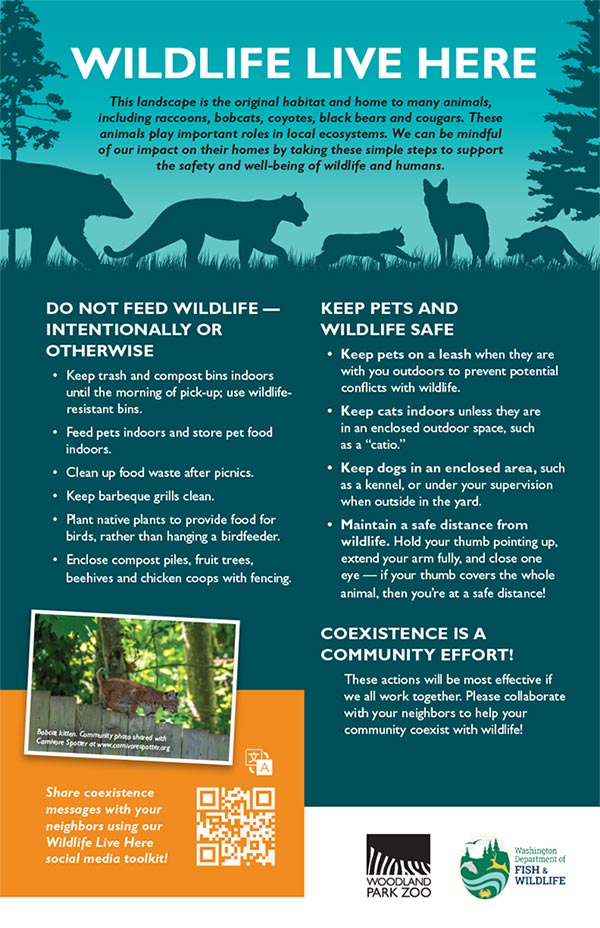
These posters with carnivore coexistence action tips were designed for urban and suburban community spaces, such as kiosks at parks, community centers, nature centers and shops. Production of these materials was made possible with the collaboration of Washington Department of Fish and Wildlife and with support from The Snoqualmie Tribe.
Wildlife Live Here (English)
Wildlife Live Here (English with Lushootseed Animal Names)
汉语(简体)(Chinese [Simplified])
Русский (Russian)
Af Soomaali (Somali)
Español (Spanish)
Tiếng Việt (Vietnamese)
Coexisting with Wildlife Social Media Toolkits
Do most of your conversations about urban carnivores happen on social media? We can help you harness the power of social media to promote coexistence! These Social Media Toolkits provide tips for coexistence actions and suggest media links to include with each post. Keep wildlife and people safe by sharing these messages on your social media accounts.
Wildlife Live Here – Social Media Toolkit
Coyotes Live Here – Social Media Toolkit
Coexisting with Carnivores Adventure Labs
Downtown Issaquah and the Issaquah Highlands
Geocaching Adventure Labs guide players through the process of finding clues, solving puzzles, and completing Adventures one location at a time. These two Adventures highlight interesting locations while also providing information about local carnivores and tips for coexistence.
The Great Carnivore Discovery (Downtown Issaquah)
Crossing Paths with Carnivores (Issaquah Highlands)
Doorhanger
Print and share this doorhanger with your neighbors to encourage actions that reduce the potential for human-wildlife conflicts.
Yard Signs
Signs for community members to display to share messages about actions people can take to coexist with local carnivores.
WE COEXIST WITH CARNIVORES
Learn More About Urban Carnivores
In urban and suburban spaces of the Pacific Northwest, we coexist with carnivores such as black bears, bobcats, cougars/mountain lions, coyotes, raccoons, and river otters. These are terrestrial mammals in the taxonomic order Carnivora. Some of them (e.g., bobcats and cougars) have a carnivorous diet (meaning they eat other animals to meet their dietary needs), while others (like black bears) are omnivorous and therefore eat plants and animals.
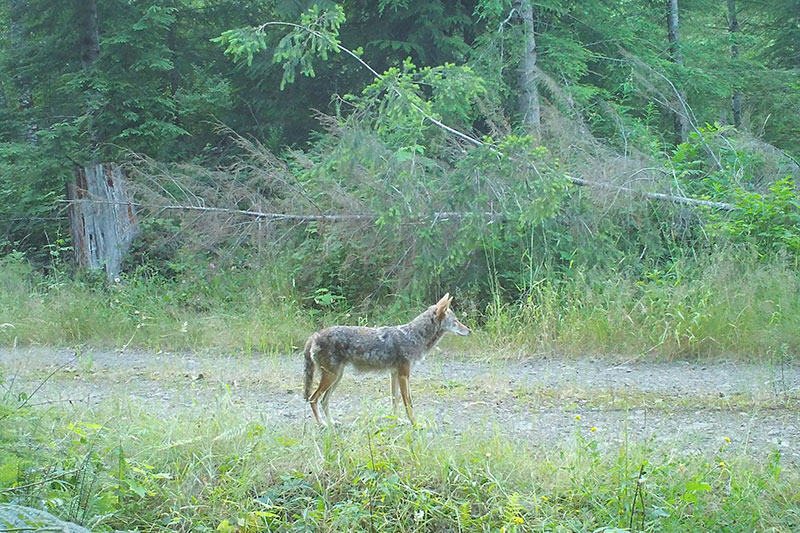
Frequently Asked Questions about Coyotes
Visit Carnivore Spotter’s resource pages for information on identifying our urban carnivore species, including black bears, bobcats, coyotes, cougars, and more.
Washington Department of Fish & Wildlife’s pages on Living With Wildlife
PAWS Wildlife Center – Helping sick, injured and orphaned wildlife get back home and thrive in the wild.
Check out the “Urban Wildlife and Landscape Connectivity” story map to better understand our wild neighbors in Seattle—and what we can do to help them.
CARNIVORES, COEXISTENCE & CLASSROOMS
Wild Wise: Coexisting with Carnivores offers middle school teachers and their students a chance to develop science inquiry, civic literacy, and leadership skills as they investigate and share solutions for living with the carnivores in their communities. Students engage in the scientific practices of developing investigative research questions, planning and carrying out investigations, analyzing and interpreting data, and constructing scientific explanations. By studying carnivore activity in their communities, students develop empathy for carnivores in our communities and better understand how humans affect landscape patterns and processes, including impacts on carnivore distribution and behavior.
Student investigations focus on the essential question:
How can humans peacefully coexist with carnivores – meeting our own needs while also allowing carnivores to meet their needs?
Middle school students who participate in the Wild Wise: Coexisting with Carnivores program demonstrate increased appreciation of living in an area with large carnivores. The proportion of students that identified behaviors they could take to prevent conflicts almost doubled from the start to the end of the unit.
Educators
Set up a free account in our new education site, Discovery Den, to learn more about this program, including options for in-person, online, and blended learning models. Already have an account? View the Coexisting with Carnivores page, and gain access to customizable resources to meet the needs of your students.
WHAT YOU CAN DO
Our Urban Carnivores Need Your Support and Appreciation!
Make an effort to coexist with carnivores and help your neighbors to do so as well. See the Coexisting with Carnivores Toolkit below to get started!
Observe
You can report and share your carnivore sightings – visit Carnivore Spotter now to report or explore local carnivore sightings throughout the greater Seattle area!
Volunteer
Participating as a Seattle Urban Carnivore Project Camera Trap Volunteer is an exciting opportunity to get hands-on experience with urban carnivore research while increasing your understanding of urban carnivores and how to foster human-wildlife coexistence.
Training for each year’s season will be offered around mid-March of that year. You will be contacted by project staff prior to training with further details.
Join the interest list for participating next season!
CARNIVORES & COMMUNITIES
From 2012 – 2021, Woodland Park Zoo collaborated with the Issaquah School District and the City of Issaquah to co-facilitate a school and community engagement program (Coexisting with Carnivores) focused on community-developed strategies to prevent human-wildlife conflict in the region and foster a sense of pride for local wildlife. Middle school students and Issaquah residents gained knowledge of local carnivores and the roles these species play as part of healthy ecosystems, and engaged in community-driven learning and problem-solving around issues of human-wildlife interaction in a growing region.
The program was made possible in part by the Institute of Museum and Library Services Museums for America grant MA-20-17-0480-17.
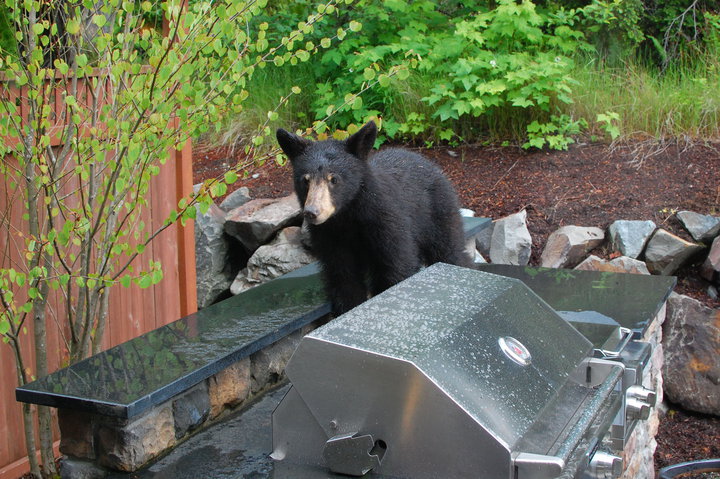
Carnivore Coexistence Action Team
The Carnivore Coexistence Action Team (CCAT) consisted of Issaquah community members who worked together to foster peaceful coexistence with carnivores in their neighborhoods. Through the use of collaborative problem solving, the action teams developed materials and implemented action strategies to promote peaceful coexistence and prevent wildlife conflicts.
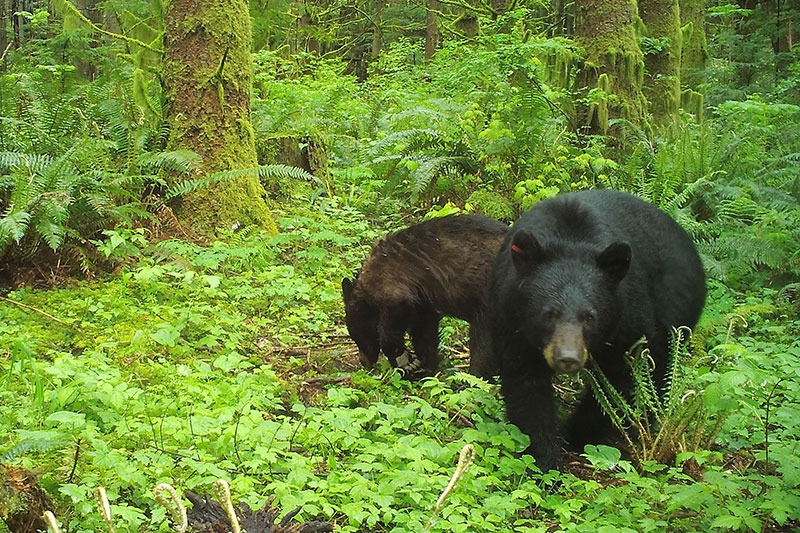
Issaquah Parks Carnivore Project
Three teams of community volunteers run remote camera stations in Issaquah parks, contributing data on local carnivores to the City of Issaquah Parks & Recreation Department and into the Seattle Urban Carnivore Project via the global Wildlife Insights database. This project is ongoing as part of the Seattle Urban Carnivore Project’s regional research.

Wild Wise: Coexisting with Carnivores
In this program, middle school students investigate and propose solutions to coexistence issues in their community. The program was supported by the Issaquah Schools Foundation, Tulalip Tribes, Horizons Foundation, Ferguson Foundation, the Association of Zoos & Aquariums Conservation Grants Fund, and Carter Subaru.