

Elk
Cervus canadensis

Big, tough herds
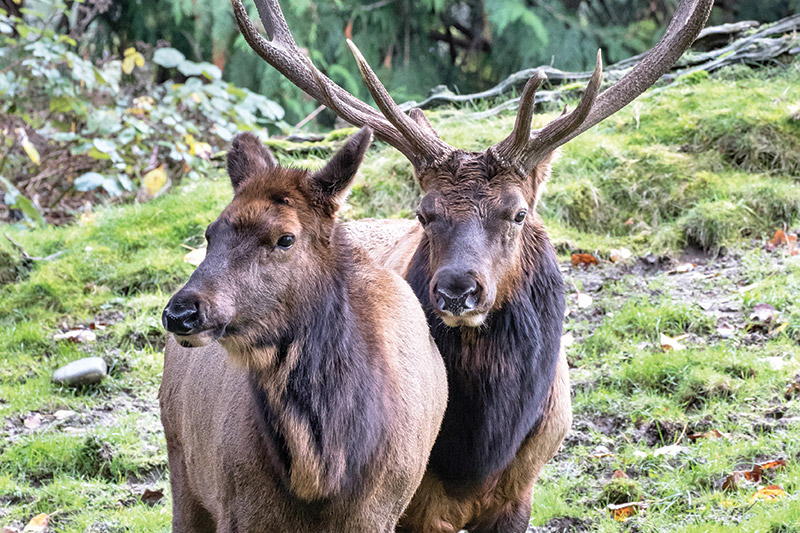
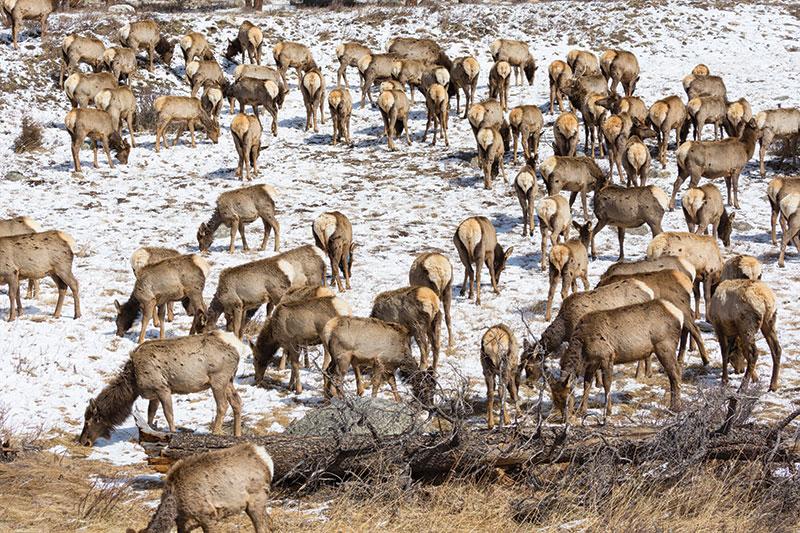
Elk are one of the largest members of the deer family—in North America, only moose are bigger. Elk are very hardy, tolerating snow and cold temperatures out in the open. They do shelter in forests to avoid predators and hunters, especially when raising their young.
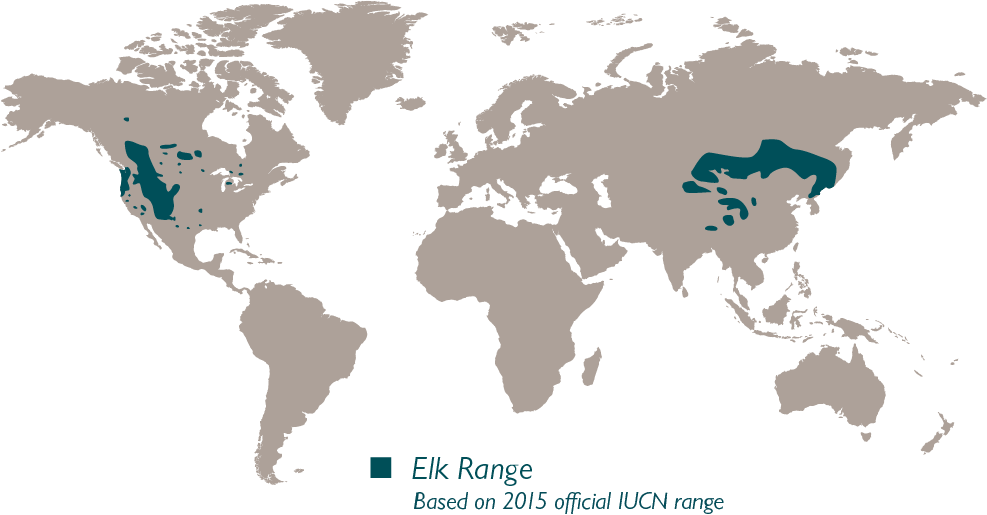
Elk Range
Based on 2015 official IUCN range
Meet The Elk
Buttons
Female, born May 2012.
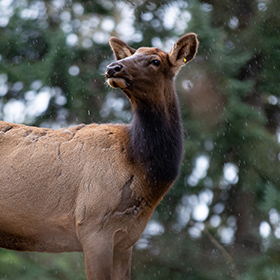
Lily
Female, born June 2019.
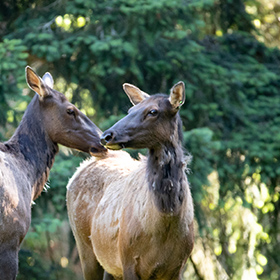
Willow
Female, born June 2018.
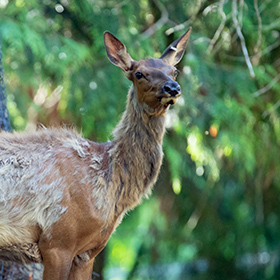
Holly
Female, born May 2022 (Dakota Zoo).
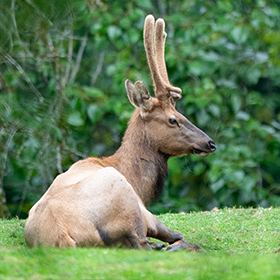
Huckleberry
Male, born Aug. 2022 (Dakota Zoo).
Status and self-defense
Male elk grow a new set of antlers every year. They use their antlers to fend off predators and battle each other for mating privileges. Each herd is led by a dominant female, though, and all elk can defend themselves with powerful kicks of their sharp hooves.
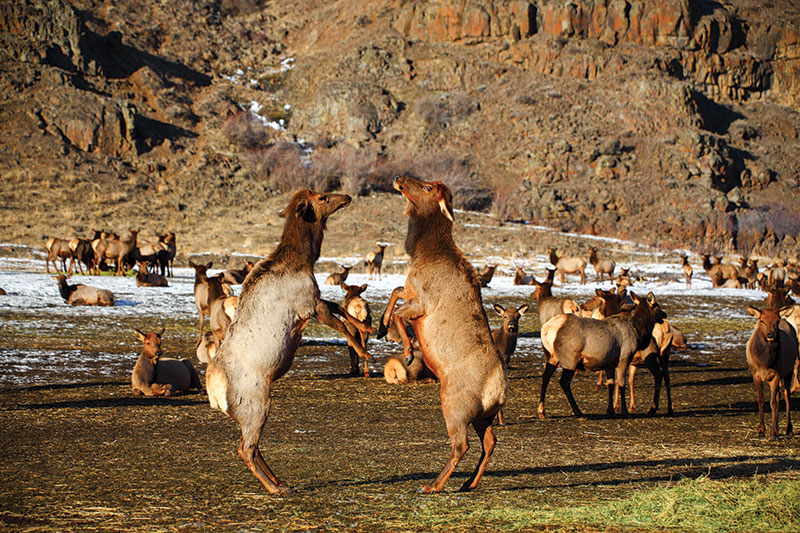
Diet: Grasses, flowering plants, and tender shoots of shrubs and trees.
Range: North America, found in forests, meadows and mountain regions of the west.
Letting nature be nature
The trouble with taking in wild animals
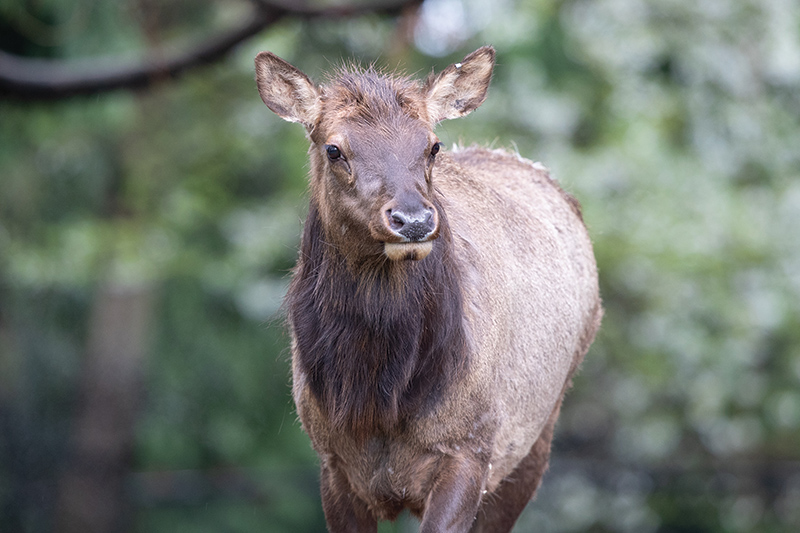
Buttons was a wild elk who was thought to be orphaned as a calf. She was hand-fed and handled by local community members until she became partially tamed. When she reached her adult weight of 500 pounds, it was clearly dangerous for Buttons to be living in town. Her lack of fear put her—and the people she lived among—at risk.
Neither tame nor wild
As our population grows and our cities expand, black bears and people come into contact more often. Sometimes conflicts happen— especially when food is involved. Living in the Northwest means we need to make good choices that keep both people and bears safe.
Consider what wildlife needs
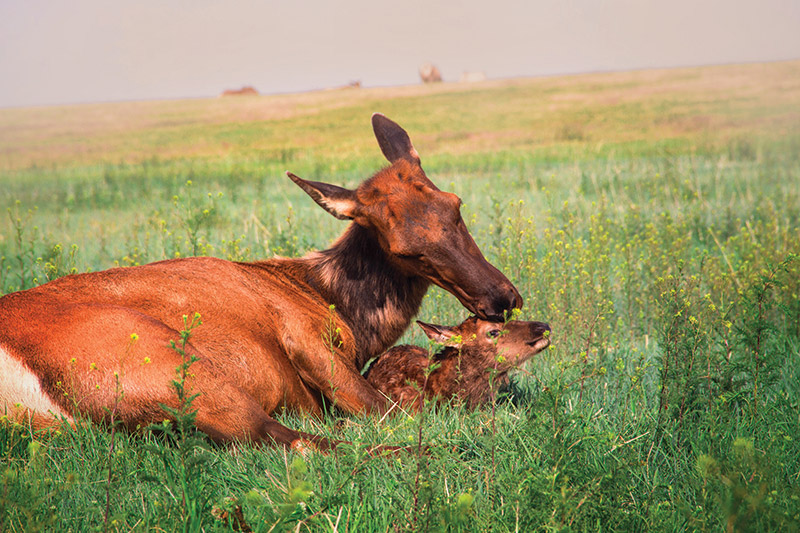
Elk and deer mothers hide their young in the grass while they feed nearby. If you discover baby animals in springtime, it is best to leave them where they are.
Don’t try to tame wild animals. Call the Washington Department of Fish and Wildlife or a licensed rehabilitation facility instead.