


Gray Wolf
Canis lupus

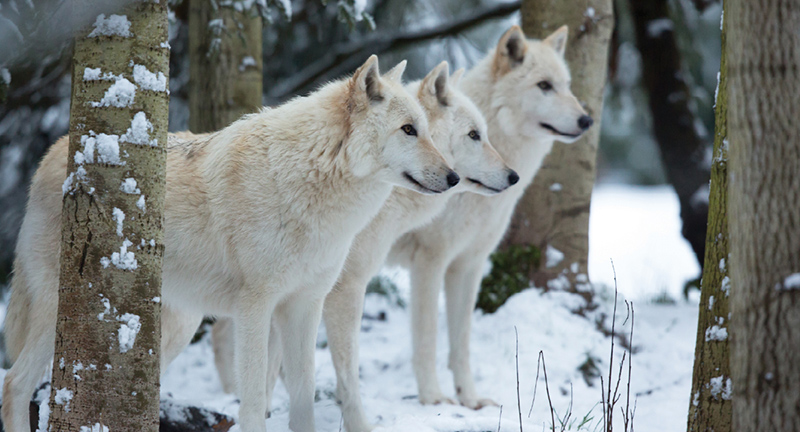
Wolves are team players
Wolves are shy when it comes to people, generally avoiding humans. In contrast, wolves are very social with their own kind. They live in family groups called “packs” that have complex social structures. Wolves work together to raise their pups, taking turns watching the den while others go out to
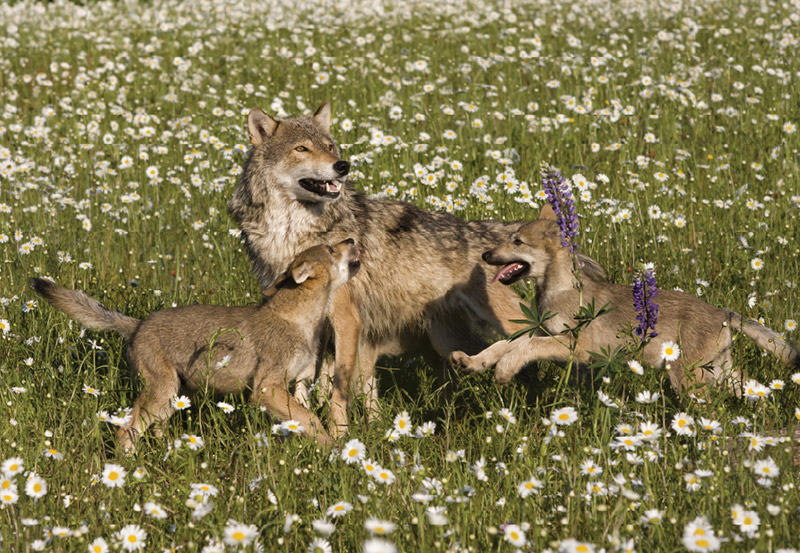
How do wolves communicate
Body language: Facial expressions and body posture reflect a wolf’s status in the group.
Voice: Howls allow communication over long distances
Scent: Dominant wolves mark their territory with urine
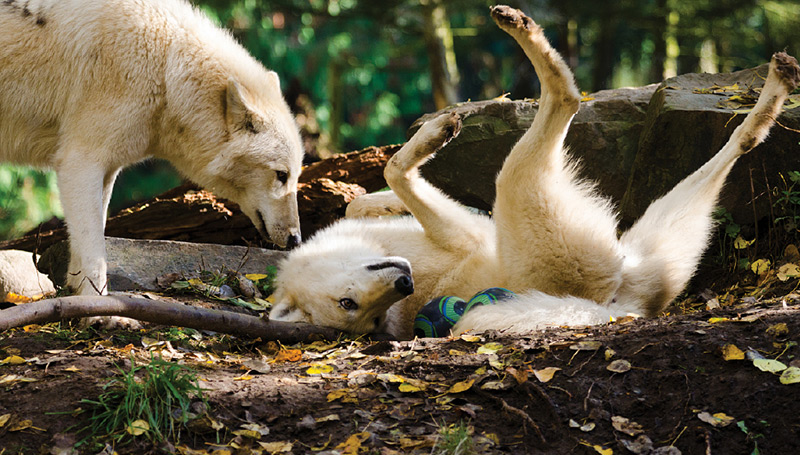
Diet: Wolves hunt in groups for large prey like moose, deer, and elk. They snack on rodents and rabbits when hunting solo.
Range: Forests, prairies, tundra, and deserts across the Northern Hemisphere
Global conservation status: Least Concern
Status in Washington: Endangered


Return of the Wolves
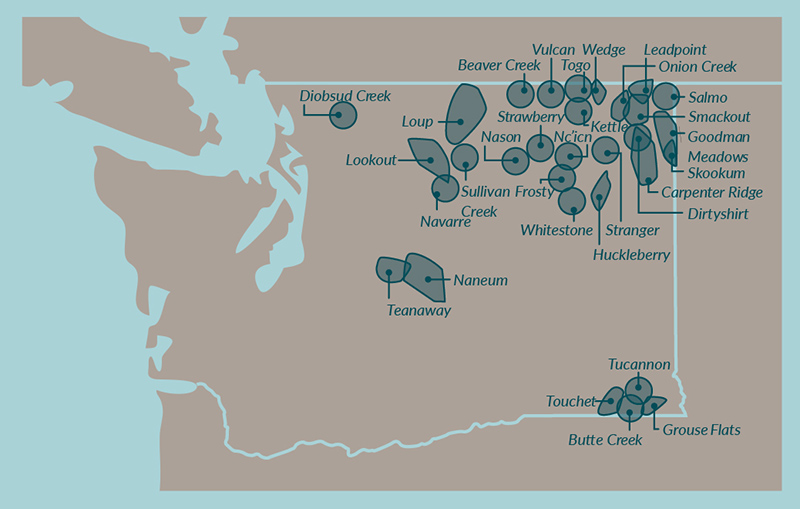
Recovering historic territory in the Pacific Northwest
Gray wolves were once common in Washington state. By the 1930s, hunters and settlers had wiped out the wolf population. With the help of state and federal protection, wolves are reoccupying our state. The Washington Department of Fish and Wildlife tracks their numbers and pack locations.
How do wolves affect ecosystems?
It’s complex! As wolves move back into Washington, researchers are watching to see if:
- Wolves and cougars compete for prey
- Wolves displace coyotes
- Deer and elk populations change
- Ranchers have success with strategies that keep wolves away from their herds
- Wolves increase ecotourism opportunities

What does coexistence mean to you?
Living in the Pacific Northwest means we learn to coexist with wildlife. Where do you live? How do you make your living? Do you have pets? How do you relax with family? We can all create our own strategies for living alongside wildlife.