We continue the fight against extinction through conservation breeding, species recovery, research and technological development for priority species.
Woodland Park Zoo, together with over 240 accredited zoos and aquariums, supports the Association of Zoos & Aquariums’ (AZA) global conservation effort, Saving Animals From Extinction (SAFE). We are committed to harnessing the collective resources of zoos, aquariums and other conservation partners to restore the most vulnerable wildlife species to healthy populations in the wild.
SAFE programs bring together AZA accredited zoos and aquariums with field-based partners to enhance conservation success through:
Woodland Park Zoo, together with over 240 accredited zoos and aquariums, supports the Association of Zoos & Aquariums’ (AZA) global conservation effort, Saving Animals From Extinction (SAFE).
Some endangered and threatened species are given a head start at Woodland Park Zoo.
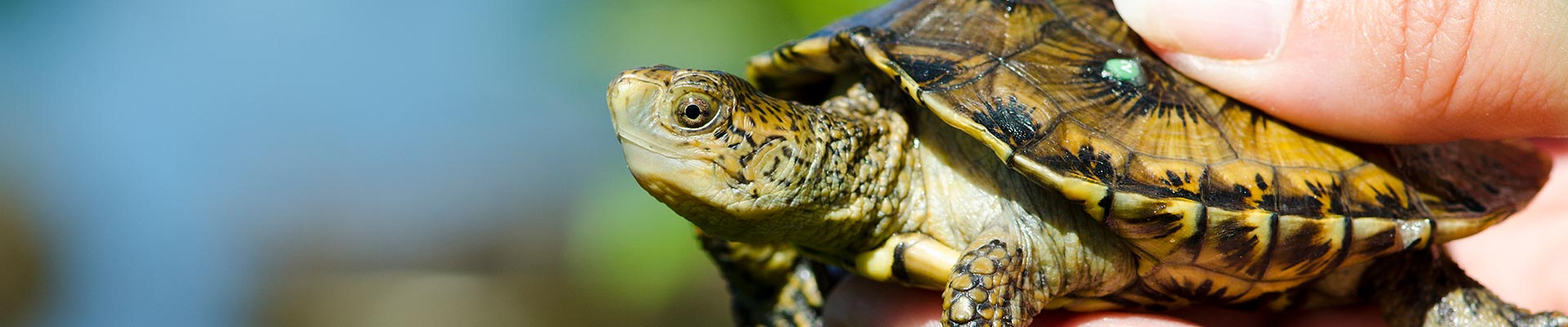
Western pond turtle eggs are collected from Washington wetlands, then hatched and raised at the zoo. When the turtles are large enough to avoid the mouths of predators, zoo scientists return them to protected wetlands. There the turtles have been surviving for generations to rebuild Washington’s endangered populations.
Oregon silverspot butterflies are similarly given a head start under the care of animal keepers before wild release to rebuild Northwest populations. In the San Juan Islands, island marble butterflies are head started in labs by Woodland Park Zoo animal keepers and released to the wild to recover wild populations.
Tiny Partula snails were extinct in the wild in French Polynesia when zoos around the world began breeding them in the 1990s so they could be returned to their island ecosystems. Woodland Park Zoo joined the effort in 2004, breeding and rearing Partula snails for release into their native island range. Six species of Partula snails were released in 2018 on Tahiti and Moorea islands, and there is evidence of survival, including observations of wild-born snails.
Accredited zoos today play an irreplaceable role in the species survival equation. Scientific research being conducted in zoos on species’ health, social behavior and reproduction are major contributions to the knowledge base on which wildlife conservation relies. In fact, many successful conservation technologies used in the wild have been developed in partnership with zoos, as have advances in wildlife medicine. These approaches integrate the best of zoo- and field-based skills and practices.
An example of this is the scent dispensers that were developed at the zoo by Dr. Robert Long. These are tubes containing s strong scent lure that is dispensed in tiny amounts over the course of a whole year, attracting shy carnivores, like wolverines, into the sight of camera traps. These species would be nearly impossible to get photos of without the scent lure, as they don’t like to follow trails. Of course, putting a smelly tube in the forest can attract other species as well so before deploying the scent dispensers in the field, animal care staff gave some to our two grizzly bears to be sure they wouldn’t be able to rip them apart.
