PRESS RELEASE / July 18, 2026
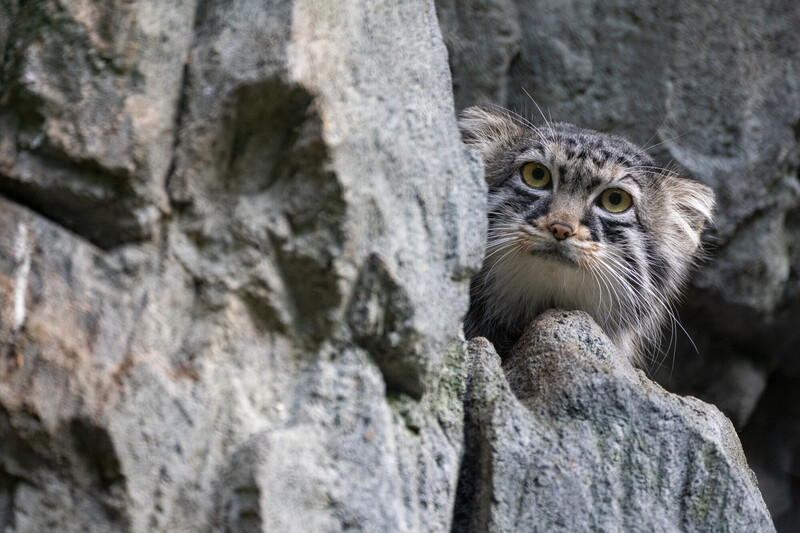
Meet Woodland Park Zoo’s newest feline, Goose, a manul. The manul, known as Pallas’s cat, is native to 16 countries in Central Asia. Visitors can discover the new manul in the outdoor section of the zoo’s Reptile Realm. (Jeremy Dwyer-Lindgren/Woodland Park Zoo)
This particular cat species may not meow, but it has attitude and a grumpy face to back it up. Meet the newest animal member at Woodland Park Zoo, a manul (MAH-nool, rhymes with cool) named Goose. The male feline arrived from Columbus Zoo in Ohio and just turned 2 years old.
Just one glance at the manul’s face and it’s no wonder grumpy cat comes to mind. With a flat-looking face, wide-set ears and round pupils, this cat displays some of the funniest expressions in the feline kingdom.
More commonly known as Pallas’s cat, manul is the cat’s name in the Mongolian language. Woodland Park Zoo received its first manul, two females, in 1992 as a gift from Chongqing Zoo as part of the Seattle-Chongqing Sister City Association. The last manul at Woodland Park Zoo passed away in 2005 of age-related causes.
“People may be curious about his peculiar name, Goose, for a cat. He was named Goose at his former home to rhyme with his dad’s and brother’s names: Moose and Roos-ter,” said Christine Verador, Animal Care Manager of Carnivores at Woodland Park Zoo. “Manul are naturally solitary and secretive, and Goose is no exception. If you don’t see this funny face immediately, be very patient—he’s still settling into his new home and manul are adept at hiding. Explore other areas of the zoo and come back, you’re bound to see him at some point, and it will be worth it!”
Goose makes his home in the outdoor portion of Reptile Realm. Modifications were made to the exhibit to meet the needs of the species including the addition of a covered area and new logs with built-in hangers for hanging a variety of enriching food items and puzzle feeders as well as interactive spring toy items.
Manul are similar in size and weight to a house cat—weighing up to 10 pounds with an average length of 26 inches; they can appear larger due to their long, beautiful fluffy coats. With solid, stocky muscles and a thick layer of fat all over their bodies, they are built low to the ground, much like a football defensive lineman. And, just like linemen, they’re poor runners and not equipped to run long distances; they stay low to the ground using their short legs—the shortest of any cat—while stalking and ambushing prey. In their environment, manul help keep the rodent population in check, eating pika (small mammal closely related to hares and rabbits) and small rodents such as voles and mice.
Fragmented populations of the sturdy manul range throughout montane grasslands and steppes of Central Asia—encompassing 16 countries from Eastern Mongolia to western Iran and core populations in Mongolia and China. With beautiful, long thick coats, these felines prefer to live in high altitudes of up to 16,000 feet and thrive in extreme temperatures, especially frosty conditions.
This cat species doesn’t meow. According to the Pallas’s cat International Conservation Alliance (PICA), vocalizations range from hisses and snarls to an unusual call during breeding season. They’re also known to honk, growl and chirp at each other.
Manul are a near-threatened species facing challenges such as illegal poaching, declining habitat degradation and fragmentation, loss of prey and accidental poisoning from farmers. For decades, Woodland Park Zoo has partnered with the Snow Leopard Trust whose focus is on saving vulnerable snow leopards and their habitats and improving the lives of people who live in the snow leopard countries of Central Asia. As manul overlap in range with snow leopards, the Trust was one of the first organizations to document them in several countries. Much of their work to save snow leopards also benefits manul, and the Trust helped form PICA to advance conservation action for the manul.
Woodland Park Zoo is currently developing a Long-Range Facilities Plan to set the future of its 92-acre campus over the next 20 years with animal wellness, conservation, extraordinary experiences, accessibility and inclusion, and sustainability guiding the plan. One proposed concept in the developing plan that was recently shared with the community as part of public engagement in the process is an Asian Highlands zone that would complete the existing Living Northwest Trail and add habitats for winter-hardy wildlife such as snow leopard, manul and takin. Visit www.zoo.org/plan for more information
In recent months, the zoo has introduced a wave of new animals to its family including hyena, Aldabra giant tortoise, hooded vulture, marabou stork and a variety of other bird species.
