
YOU’RE IGNITING A MOVEMENT FOR CONSERVATION
It’s 5:00 a.m. in 1988 and Rob Liddell has been awake for some time. As a doctor in training preparing to become a diagnostic radiologist, he’s been immersed in studying for his board exams. Exhausted but determined, he studies an x-ray image of human anatomy and pauses to admire its beauty. His thoughts drift to animals, and he wonders how an x-ray of animal anatomy might compare.
Inspired, he sends a letter to Woodland Park Zoo’s animal health team and a few days later a veterinarian invites Rob to meet him at the zoo. What began as a spark of curiosity would become an impactful partnership spanning nearly four decades and forever elevating the care of animals from Seattle to the cloud forests of Papua New Guinea.
“We had this symbiosis, so to speak, of improving care for the animals at the zoo by working together,” Rob remarks when reflecting on that initial meeting.
Over the years, Rob’s medical expertise has helped transform how animals receive diagnostic care at Woodland Park Zoo. From consulting on complex medical cases to performing CT scans on gorillas and other species, he has volunteered countless hours to support the health and well-being of animals large and small.
Dr. Liddell’s commitment has extended far beyond veterinary medicine. Alongside volunteer service on the zoo’s Board of Directors and now a Director Emeritus, Rob has remained a steadfast advocate for the zoo’s mission, helping strengthen conservation efforts locally and globally.
One impactful experience that shaped his dedication to conservation began when Rob was performing a CT scan on a Matschie’s tree kangaroo. During the procedure, the animal keeper assisting him mentioned that tree kangaroos would likely go extinct in the wild. That troubling information stuck with him.
A few years later, Rob learned that Dr. Lisa Dabek had founded the Tree Kangaroo Conservation Program to protect the species and its cloud forest habitat and knew he wanted to help.
Since then, he’s traveled to Papua New Guinea four times as part of the One Health Initiative, a team of volunteer medical professionals helping to address healthcare needs, provide health education and support stronger futures for local communities in this region. For Rob, conservation and community well-being go hand in hand.
“We’re trying to provide the people who live there with a voice,” he says.
In addition to helping improve the health of local people, Rob also assesses the health of tree kangaroos. This involves bringing battery powered x‑ray and ultrasound machines into the cloud forests where they live. Keeping them working in the rain and humidity is no easy feat but greatly helps deepen understanding of this endangered species.
As the Tree Kangaroo Conservation Program celebrates its 30-year anniversary, Rob’s story serves as a powerful reminder of what is possible when people come together to protect wildlife. He believes that lasting conservation of wildlife begins with education and is consistently putting this belief into action.
“A successful conservation story is one where you help people understand a solution and then empower them to carry it out,” he notes.
This same belief inspires Rob and his wife, Dr. Marti Liddell, to support Woodland Park Zoo’s Summer Internship Program, which prioritizes students who are underrepresented in conservation careers. By helping young people gain confidence and experience learning new skills, they are investing in the next generation of species-saving leaders, educators and scientists.
They value the zoo’s commitment to education, and how staff inspire visitors and each other to create positive change for wildlife, the environment and their communities.
“The zoo is a product of the people who work here, and it’s significant and impactful. It’s making the world a better place,” Rob says.
What began as a sleepless moment of curiosity nearly 40 years ago has grown into a lifetime of service, generosity and impact.
Through his expertise, leadership, and unwavering commitment to education and conservation, Rob has helped improve the lives of animals and people across the globe. Woodland Park Zoo is deeply grateful to Rob and Marti Liddell for the countless ways they have strengthened our mission and shown what is possible when curiosity leads to collaboration, and collaboration leads to lasting change.
When Madeline Haydon helped find a home for two Aldabra giant tortoises, it was just the latest chapter in a lifelong commitment to making a meaningful difference in her community.
As the daughter of refugee parents who fled the Vietnam War with her and her siblings, Madeline grew up understanding resilience and the importance of helping others succeed. Today, those values guide everything she does, from her philanthropy to her support of wildlife conservation.
Madeline’s drive to make a positive difference for people led to her creation of Nutpods, the plant-based coffee creamer brand headquartered in Bellevue, Wash. As the founder and creator, she is proud to have created a healthy alternative to a product used by people every day.
After successfully growing and recently selling her business, Madeline has turned her attention toward furthering the causes that are most important to her. From establishing scholarship endowments for first-generation college students to launching initiatives to create more opportunities for women in business, she is striving to make a meaningful impact by opening doors for future generations.
That commitment to creating a better future extends beyond people and into the natural world. One of her most recent acts of philanthropy inspired new hope for a pair of Aldabra giant tortoises.
“We learned there was a private facility looking for a new home for their Aldabra tortoises. These gentle giants, who once were hunted to near extinction and are a vulnerable species, needed a suitable and knowledgeable new home that could commit to them for the rest of their long lives,” Madeline shares.
As a passionate advocate for the environment, Madeline was inspired by Woodland Park Zoo’s ability to foster empathy for wildlife while also providing practical ways visitors can help protect animals and their habitats.
Determined to ensure the tortoises would have a forever home that would enable them to thrive, Madeline and her husband Geoff helped rescue and donate them to the zoo’s care.
“We were happy to facilitate this rescue and give them the opportunity to become ambassador animals for Woodland Park Zoo where they can encourage curiosity, compassion and respect for wildlife. This is an exciting chance for all who may never get a chance to visit them in their native habitat of Aldabra Island in the Seychelles,” she remarks.
Today, guests have the opportunity to meet the tortoises, 23-year-old Mary and 15-year-old Elise, at the zoo’s new Wild Encounters and form the meaningful connections Madeline describes.
By sharing her story, Madeline hopes to encourage others to get involved with organizations working to better their communities.
“You don’t need to have a billion dollars in net worth to get involved and support nonprofits doing meaningful work,” Madeline says. “I didn’t want people sitting on the sidelines saying to themselves, ‘Well, I’m certainly not in that wealth bracket.’ There are so many ways to contribute—through time, talent and financial support—to organizations that are making a real difference.”
Thank you to Madeline for her generous support of Woodland Park Zoo and commitment to saving wildlife. She helps ensure a brighter future for people and the environment and furthers the zoo’s efforts to engage our community in protecting the diversity of life on Earth.
Since childhood, animals have played an important role in the lives of Nolan and Joyce Schmidt. Their early experiences were worlds apart, with Joyce growing up on a ranch surrounded by cats and barn animals and Nolan encountering bears on fishing trips in Alaska. Yet each developed a shared appreciation for nature and a lifelong love of animals, especially cats.
“We love really any cat, big or small. The whole cohort is unparalleled,” says Nolan.
This passion has shaped their personal and professional lives. Fittingly, Joyce is a veterinarian, transforming her childhood love of animals into a career dedicated to their care. As the owners of Camano Veterinary Clinic, the Schmidts help animals every day.
“We have to rally behind the idea that we would like things to be better, and we want to make a difference while we’re here,” notes Nolan.
With that belief guiding them, they set out to focus their philanthropy where it could have the greatest impact on the survival of big cats, specifically tigers. They looked no further after discovering that Woodland Park Zoo would utilize their donations transparently and effectively.
“We love visiting the zoo, and we love the big cats that are there. It was just a natural fit,” shares Joyce.
They were also pleased to learn that the zoo’s work extends far beyond its 92 acres, supporting on-the-ground conservation efforts locally and around the world.
Joyce and Nolan began putting their passion for tigers to work by supporting the Malayan Tiger Conservation Project, which they knew would help save not only their favorite animals but other wildlife as well.
“By preserving the wild, larger cat species, we’re also preserving the environments they live in and all the creatures that share their ecosystem,” says Joyce.
Launched in 2012 through a partnership between Woodland Park Zoo, Panthera and Rimba, the Malayan Tiger Conservation Project helps protect Malayan tigers in and around Taman Negara National Park in peninsular Malaysia. Program staff work with The Malaysian Department of Wildlife and National Parks and other agencies and non-profits to prevent poaching, reduce tiger-human conflict, and restore tiger habitat by protecting forests and connecting wildlife corridors.
Today, the program demonstrates steady progress. Project teams in Malaysia have confirmed a significant population of Malayan tigers within Taman Negara National Park, successfully captured and prosecuted poachers, and monitored individual tigers and other wildlife with the use of remote cameras.
None of this would be possible without contributions from people like Nolan and Joyce. Beyond their personal giving, Camano Veterinary Clinic sponsors the zoo’s Saving Species Impact Fund during All for Animals Giving Day and matches gifts dollar for dollar.
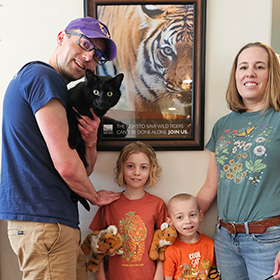
Over the years, Nolan and Joyce have shared their passion for tigers with their kids, Delaney and Rodger. The two light up each time they visit the zoo and insist on visiting the tiger habitat as soon as they arrive.
Seeing their children’s excitement and love for tigers has become a powerful reminder of why protecting these remarkable animals matters and the importance of not waiting to act.
“When you’re an animal advocate, you’re somebody who stands up for those who can’t speak up for themselves. You can be part of the voice of change,” remarks Nolan.
Thank you to Nolan and Joyce for your incredible support of the animals at Woodland Park Zoo and the Malayan Tiger Conservation Project. Your dedication is helping protect wildlife and habitats for generations to come.
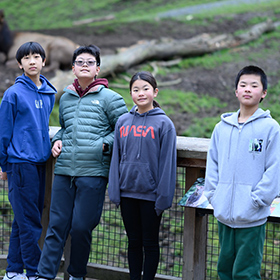
On a sunny summer afternoon, you might find a group of young people standing proudly behind a market table covered in homemade crafts, each item created with a bigger purpose. These students are part of Bright Future Network, a non-profit organization dedicated to helping young students discover their passions and build skills for success in today’s technology-driven world. Through the network’s Junior CEO Program, students dive into hands-on lessons in leadership, collaboration, creativity and problem-solving.
Elementary and middle school students Ethan, Iris, Justin and Quinland participate in the program and are learning firsthand the importance of giving back to their communities.
Each summer, students in the program operate their own community markets. From brainstorming product ideas and determining how many items to make to speaking with interested buyers, they learn all about the planning and confidence needed to share their products with the public. Recently, visitors to their market were treated to a number of colorful creations to peruse including slime, animal keychains and mystery boxes!
“We have fun in the process of making and selling stuff, and meeting new people,” the students say.
Along the way, they gain entrepreneurial skills they can carry with them into adulthood and experience the joys of supporting their community.
“Finishing making everything and then once people buy our products, we feel like we accomplished something really good. Also, it feels nice knowing we can help animals in this way,” they share.
In addition to gaining valuable business skills, the Junior CEO program also connects them to the importance of philanthropy, as the group gets to decide where to donate the profits made from each of their markets.
Last summer, their love for animals and fond memories of visiting Woodland Park Zoo inspired their decision to donate their hard-earned money to help care for animals at the zoo. From bugs to bunnies to red pandas, they each have a love for different species that motivates them to help safeguard wildlife and the environment.
At their young age, these future leaders already understand the importance of protecting the environment for the health of people and animals alike and recognize that their actions “… could possibly inspire others to do the same.”
They also shared some encouragement for other young students who want to make a difference for animals:
“Have an idea on what you want to do to help raise money for places like the zoo, whether that’s having a lemonade stand or a garage sale. And then just like… do it!”
Thank you to Ethan, Iris, Justin and Quinland and all the other young leaders at Bright Future Network. Your passion, creativity and commitment to helping wildlife is inspiring, and a meaningful reminder that people of any age can make a difference for the natural world.